
"total output"
2000 article(s) found
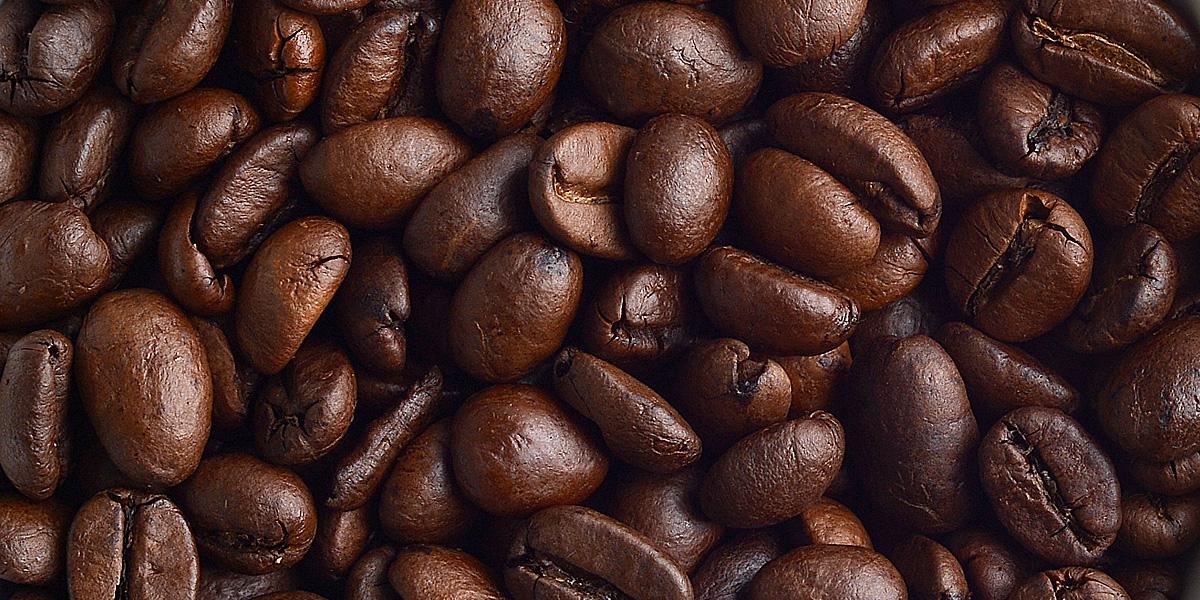
Yunnan coffee growing area, Yunnan coffee introduction
Almost all coffee grown in China is in Yunnan, and nearly 60% of Yunnan coffee production comes from Pu'er. In fact, Yunnan has become one of the planting bases of Nestl é and Starbucks. Nestle alone buys 1/5 of Yunnan's total coffee output every year. 1. [output] compared with the popularity of Pu'er tea, the fame of Pu'er coffee is not commensurate with the output. Coffee production in Yunnan accounts for

The Green Dream of Coffee in Yunnan Coffee planting Environment in Yunnan
Abstract: introduction: outshining others is not spring. In order to make great progress in Yunnan coffee industry, intensive processing is the only way, and in the face of competition from international coffee giants, Yunnan coffee needs the effect of industrial clusters more. And this will be the situation that zhengfu likes to hear and see. In 2012, Yunnan coffee output is expected to be 60,000 tons, accounting for 98% of the national coffee output, accounting for the world.

The Peak period of Comprehensive Development of Coffee industrialization in China
In 1992, Yunnan Coffee Factory was established. It is a coffee cooperation project of the United Nations Development Programme (UNDP) of the Chinese government. The total assets of the enterprise are 23 million yuan, which belongs to Yunnan Land Reclamation Group. The company moved to Kunming National Economic and technological Development Zone in 2004 and now covers a total area of 15751 square meters and a construction area of 4200 square meters. Main building: workshop 1248 square meters

Yunnan Pu'er Coffee what is the relationship between Yunnan Pu'er Coffee cultivation and roasting Coffee and Climate
Yunnan Pu'er coffee [output] compared with the popularity of Pu'er tea, the fame of Pu'er coffee is not commensurate with the output. Yunnan coffee production accounts for 98.8% of the country's total output; Pu'er coffee production accounts for 57.8% of Yunnan's total output; and the price of a cup of Starbucks coffee is equivalent to 25 cups of AA grade Yunnan coffee beans. [planting] in 2011, planting one mu of coffee trees in Pu'er could earn 4000 yuan and 8000 yuan.
Basic information on coffee varieties
Suitable cultivation conditions: Arabica variety (Arabica) is suitable for plateau cultivation, Robesta variety (Robusta) is suitable for lowland cultivation, and Liberian variety (Liberica) is suitable for minimum cultivation. Production: the Arabica variety (Arabica) accounts for about 70-80% of the world's total output; the Robesta variety (Robusta) accounts for about 20-30% of the world's total output of Liberian varieties (Liberica)

The potential of Coffee consumption in China Yunnan Coffee epitomizes the development of Chinese coffee
Professional coffee knowledge exchange more coffee bean information please follow coffee workshop (Wechat official account cafe_style) China Coffee Engineering Research Center Dr. Chen Zhenjia said that by the beginning of 2016, China's coffee planting area exceeded 1.8 million mu, with a total output of 140000 tons, accounting for 1.5% of the world's total output. More than 70 countries around the world produce coffee, producing more than 100000 tons of coffee.

The Brazilian Coffee Information Agency predicts that the total output of coffee in Brazil in the new season in 2021 will be 52.01 million bags.
More boutique coffee beans please add private Wechat Qianjie Coffee, WeChat: kaixinguoguo0925 as 2021 is Brazilian coffee is a biennial coffee production cycle, coupled with the 2020 dry season in Brazil, the global agencies on Brazil 2021 Coffee 22 production season forecast, the average total coffee production in Brazil is expected to be 52.01 million bags (60 kg / bag). 2021cyber 22 quarter bus
Comparison of basic data of Coffee varieties
Suitable cultivation conditions: Arabica variety (Arabica) is suitable for plateau cultivation, Robesta variety (Robusta) is suitable for lowland cultivation, and Liberian variety (Liberica) is suitable for minimum cultivation. Production: the Arabica variety (Arabica) accounts for about 70-80% of the world's total output; the Robesta variety (Robusta) accounts for about 20-30% of the world's total output of Liberian varieties (Liberica)

Production and Marketing of Tea and Coffee in Kazakhstan in the first half of 2017
For the exchange of professional baristas, please follow the coffee workshop (official Wechat account cafe_style). Harbin produced 10080 tons of tea and coffee from January to July, an increase of 1.8 percent over the same period last year. Among them, Almaty is the main producing area, producing and processing 8377 tons of tea and coffee, accounting for 83.1% of the country's total output, with large tea merchants such as Tea House, while Almaty produces 1164 tons, accounting for the country's total output.

Current Situation and Prospect of Coffee Industry in Vietnam
Pay close attention to coffee reviews (Weixin Official Accounts vdailycom ) and find a beautiful coffee shop to open its own shop. 1. Overview of Vietnam's coffee industry Since coffee trees were first introduced into Vietnam in 1857, Vietnam has grown coffee for 160 years. In recent years, coffee cultivation area in Vietnam has expanded rapidly, and production has increased significantly, driving processing, sales and exports, forming a complete

Comparison of basic Information of Coffee varieties
Suitable cultivation conditions: Arabica variety (Arabica) is suitable for plateau cultivation, Robesta variety (Robusta) is suitable for lowland cultivation, and Liberian variety (Liberica) is suitable for minimum cultivation. Production: the Arabica variety (Arabica) accounts for about 70-80% of the world's total output; the Robesta variety (Robusta) accounts for about 20-30% of the world's total output of Liberian varieties (Liberica)
Comparison of basic data of Fine Coffee varieties
Suitable cultivation conditions: Arabica variety (Arabica) is suitable for plateau cultivation, Robesta variety (Robusta) is suitable for lowland cultivation, and Liberian variety (Liberica) is suitable for minimum cultivation. Production: the Arabica variety (Arabica) accounts for about 70-80% of the world's total output; the Robesta variety (Robusta) accounts for about 20-30% of the world's total output of Liberian varieties (Liberica)

Comparison of basic data of Coffee varieties
Suitable cultivation conditions: Arabica variety (Arabica) is suitable for plateau cultivation, Robesta variety (Robusta) is suitable for lowland cultivation, and Liberian variety (Liberica) is suitable for minimum cultivation. Production: the Arabica variety (Arabica) accounts for about 70-80% of the world's total output; the Robesta variety (Robusta) accounts for about 20-30% of the world's total output of Liberian varieties (Liberica)
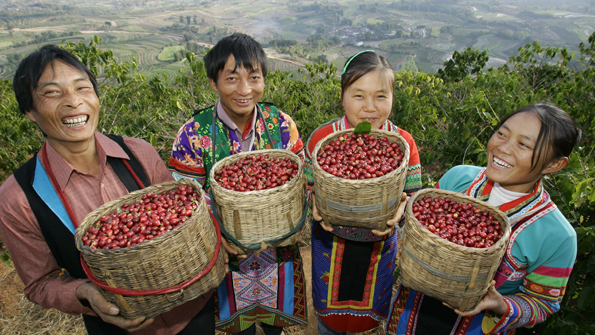
The green dream of Yunnan coffee is the only way to take intensive processing, and join the competition of international coffee giants.
Yunnan coffee was planted on a large scale in the mid-1950s, with a planting scale of 4000 hectares at one time. By the end of 1997, the planting area of coffee in the province had reached 7800 hectares. At present, the planting area of the province accounts for 70% of the national area, and the output accounts for 83% of the whole country. Yunnan coffee has established the dominant position in China in terms of planting area and coffee bean production. At present, Pu'er City is still there.

Lujiangba Arabica Coffee: Large Output Lack of Famous Brands
Superior natural geographical and climatic conditions make Yunnan Arabica coffee favored by foreign merchants for its excellent quality, and its export volume accounts for more than 50% of the country's coffee exports, ranking first in the country. But 90% of exports have been lower-priced green coffee beans and lack of nationally recognized brands. At the beginning of April, the reporter of 21st Century Economic Report visited Lujiangba, Baoshan City, Yunnan Province

The global output of raw coffee beans in 2016 increased by about 1.4 million bags over last year.
The global output of raw coffee beans in 2016 increased by about 1.4 million bags over last year. Brazil is still the top coffee producer in the world, followed by Vietnam, the high producer of Robusta. Although Arabica is more fastidious about its growing environment, due to market demand, the output of Arabica this year is still much higher than that of Robusta, and the proportion is close to 7:3 in terms of global coffee consumption.
Yunnan coffee planting area and output account for 99% of China's coffee industry needs to be improved
Xinhua Yunnan Channel April 12 (Reporter Ji Zhepeng) The reporter learned from the Agriculture Department of Yunnan Province that after more than 100 years of development, Yunnan has become the largest coffee producing area in China. In 2014, Yunnan coffee planting area reached 1.87 million mu and output reached 118,000 tons, accounting for more than 99% of the country. According to the analysis of global coffee production and marketing situation, Yunnan coffee planting area is expected to reach 2.5 million by 2020.

Basic knowledge of coffee beans comparison of basic data of coffee bean varieties
Suitable cultivation conditions: Arabica variety (Arabica) is suitable for plateau cultivation, Robesta variety (Robusta) is suitable for lowland cultivation, and Liberian variety (Liberica) is suitable for minimum cultivation. Production: the Arabica variety (Arabica) accounts for about 70-80% of the world's total output; the Robesta variety (Robusta) accounts for about 20-30% of the world's total output of Liberian varieties (Liberica)

Liberia, produced in West Africa, currently accounts for about 5% of the world's total economically grown coffee production.
It accounts for only about 5% of the Liberica in the world's coffee. Translated into Chinese, it is called Liberica growing coffee beans, which is produced in Liberia in West Africa. At present, it accounts for about 5% of the total output of economically grown coffee in the world, with very little output, monotonous flavor, high bitterness, much larger shape than ordinary coffee beans, and the skin is very thick and difficult to remove the pulp.

With the rapid development of coffee in China, there has been a qualitative breakthrough in the planting area and total output.
According to current market data, emerging countries represented by China, Brazil, Russia, India and South Africa currently consume 20% of the world's coffee, which will reach 35% by 2020. Domestic consumers have a growing demand for coffee. In recent years, the world coffee giants have seized the Chinese market, and domestic coffee companies have also begun to build local coffee brands.